

The drive home is the easy part.What happens in the first 48 hours sets the tone for everything that follows.
Most new kitten owners focus heavily on what to buy and what to feed — and miss the thing that matters most in the first week: how the kitten experiences the transition itself. Leaving their mother, their littermates, and every familiar smell they've ever known is genuinely stressful for a small animal. How you manage that stress shapes how quickly they settle, how confident they become, and — if you have other cats — whether the introduction goes smoothly or creates lasting conflict.
🏠 Set Up a Base Room Before They Arrive
Don't give a new kitten access to your whole house on day one. It sounds counterintuitive, but a large space is overwhelming to a small animal who has just lost every point of reference they've ever had. A single room — a spare bedroom or bathroom — with everything they need is far less stressful and helps them build confidence before exploring further.
The base room should have:
- A warm, enclosed bed or hide — somewhere they can feel contained and safe, not just a flat cushion
- Food and water at opposite ends of the room — cats instinctively avoid eating near water sources
- A litter tray in a quiet corner, away from food and water
- A few toys — but don't overwhelm them on day one. One or two familiar-smelling items is better than a pile of new things
- No hiding spots you can't access — behind washing machines, inside furniture bases, under floor boards. If they go in, you can't get them out safely
Let them expand their territory gradually over days, not hours. A kitten who has thoroughly explored and feels safe in one room is ready for two rooms. A kitten who has been released into a five-bedroom house on day one is a kitten who hides under a bed for a week.
😰 Understanding Rehoming Stress
Stress in kittens isn't just behavioural — it has physical consequences. The most common is digestive upset: loose stools or diarrhoea in the first few days that isn't caused by illness, but by the combined impact of leaving the litter, a change in food, and the physiological stress response. This is normal, but it's worth supporting rather than just waiting out.
Adding a probiotic to their food from the first day home helps stabilise the gut microbiome during the transition, reduces the severity and duration of stress-related diarrhoea, and supports the immune system at a time when it's genuinely under pressure. Think of it as a seatbelt for their digestive system during the journey of rehoming.
Other common signs of normal settling-in stress include hiding, reduced appetite for 24–48 hours, and being quieter than expected. These usually resolve within a few days as the kitten adjusts. If hiding is prolonged beyond 3–4 days, appetite doesn't return, or you see repeated sneezing, eye discharge, or lethargy, contact your vet — these can be signs of an upper respiratory infection, which is common in kittens from busy environments.
🌿 Feliway: The Quietest Tool in Your Kit
When cats feel safe and at home in a space, they leave a subtle chemical signal — rubbing their cheeks on furniture, doorframes, and the legs of chairs. This is called facial pheromone marking, and it essentially tells the cat "this place is safe." A new kitten in a new home has none of these signals anywhere.
Feliway is a synthetic version of this exact pheromone, delivered through a plug-in diffuser. It doesn't sedate or medicate — it simply provides the chemical reassurance that a cat would normally only feel after weeks of establishing their own territory. Plug it in before your kitten arrives, ideally in the base room where they'll spend their first few days.
💡 Getting the Most Out of Feliway
⏰ Start Before They Arrive: Plug in the diffuser at least 24 hours before your kitten comes home. It takes time to build up in the room, and you want it working from the moment they walk in.
📍 Placement Matters: Position the diffuser in an open socket, low on the wall, in the room your kitten will spend most time in. Don't put it behind furniture or curtains — airflow is what distributes it.
📅 Run It Continuously: One refill lasts about 30 days. Most owners find the biggest benefit in the first 2–4 weeks. For ongoing multi-cat households, many run it permanently as preventative management.
🐱 Multi-Cat Homes: For households with existing cats, Feliway MultiCat is formulated specifically to reduce inter-cat tension. Place diffusers in the rooms where cats spend the most time together — common areas, not just the new kitten's room.
🐱 Introducing a New Kitten to Resident Cats
This is where most owners go wrong — rushing the introduction because the cats seem curious, or because they want the household to be "normal" again. Cats are territorial animals who rely on scent to understand their world. A new kitten is an unknown intruder until proven otherwise, and a bad first meeting can create a conflict that takes months to resolve.
Week 1 — Scent Only
Keep the kitten in the base room. Swap bedding between the kitten and resident cat so they can smell each other with no pressure and no visual contact. Feed both cats on opposite sides of the closed door — positive association with each other's scent begins here.
Week 2 — Visual Without Contact
Crack the door or use a baby gate so they can see and smell each other without touching. Watch body language — hissing is normal at this stage. Flat ears, growling, or a puffed tail means slow down. Calm curiosity means you're ready to progress.
Week 3+ — Supervised Together
Short supervised sessions in a neutral space — not the resident cat's favourite room. Have multiple escape routes for both cats. Distract with play or food. Never force proximity. Let them set the pace. Some cats are friends within days; others take months.
Never punish hissing or growling — these are normal communication, not aggression. Punishing them creates negative associations with the other cat and makes things worse. If introductions are going very badly — sustained attacks, one cat refusing to eat or use the litter box — contact your vet. A behaviourist referral or short-term medication is sometimes the right call, and there's no shame in getting help early rather than letting conflict entrench.
👐 The First Week with Your Kitten
It's tempting to hold your new kitten constantly and introduce them to everyone immediately. Resist this urge for the first day or two. Let them come to you. Sit on the floor in their room, let them sniff you at their own pace, and use a wand toy to interact without requiring physical contact they haven't chosen. A kitten who chooses to approach you is building trust. A kitten who is repeatedly picked up before they're ready is learning that humans are unpredictable.
Most kittens settle noticeably within 3–5 days, and are genuinely at home within two weeks. The investment in a slow, calm introduction pays dividends for the entire relationship — a confident kitten who felt safe in their transition becomes a confident, sociable adult cat.
Takeaway: The settling-in period isn't something to rush through — it's the foundation of your cat's relationship with your home and everyone in it. A base room, Feliway running before arrival, gut support for stress diarrhoea, and a slow cat introduction are the four things that make the biggest difference in the first two weeks.


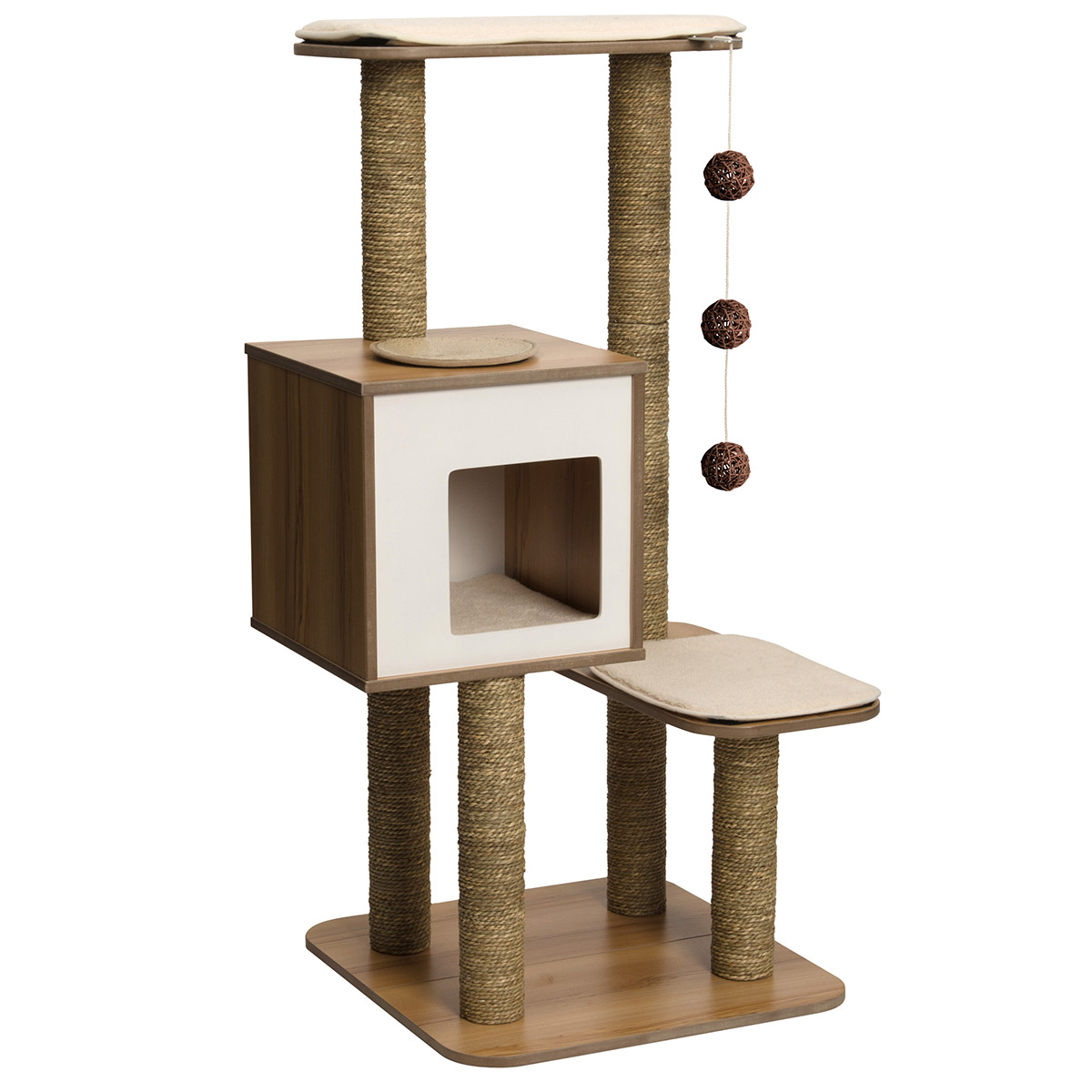
Catit Vesper Cat Tree - Walnut
A home of their own & keeps them from scratching your furniture
Shop Now

Cascade Veterinary Hospital
Client centered & community minded — Princeton, BC
Mon–Fri 9AM–5PM | 250-295-0312 | webstore@cascadevethospital.ca
Visit Our Webstore